
◆ websites for chip tuners
A chip tuning website where a driver types in his engine, sees what you can do with it, scrolls through your dyno sheets and writes to you on WhatsApp before he has closed the tab.
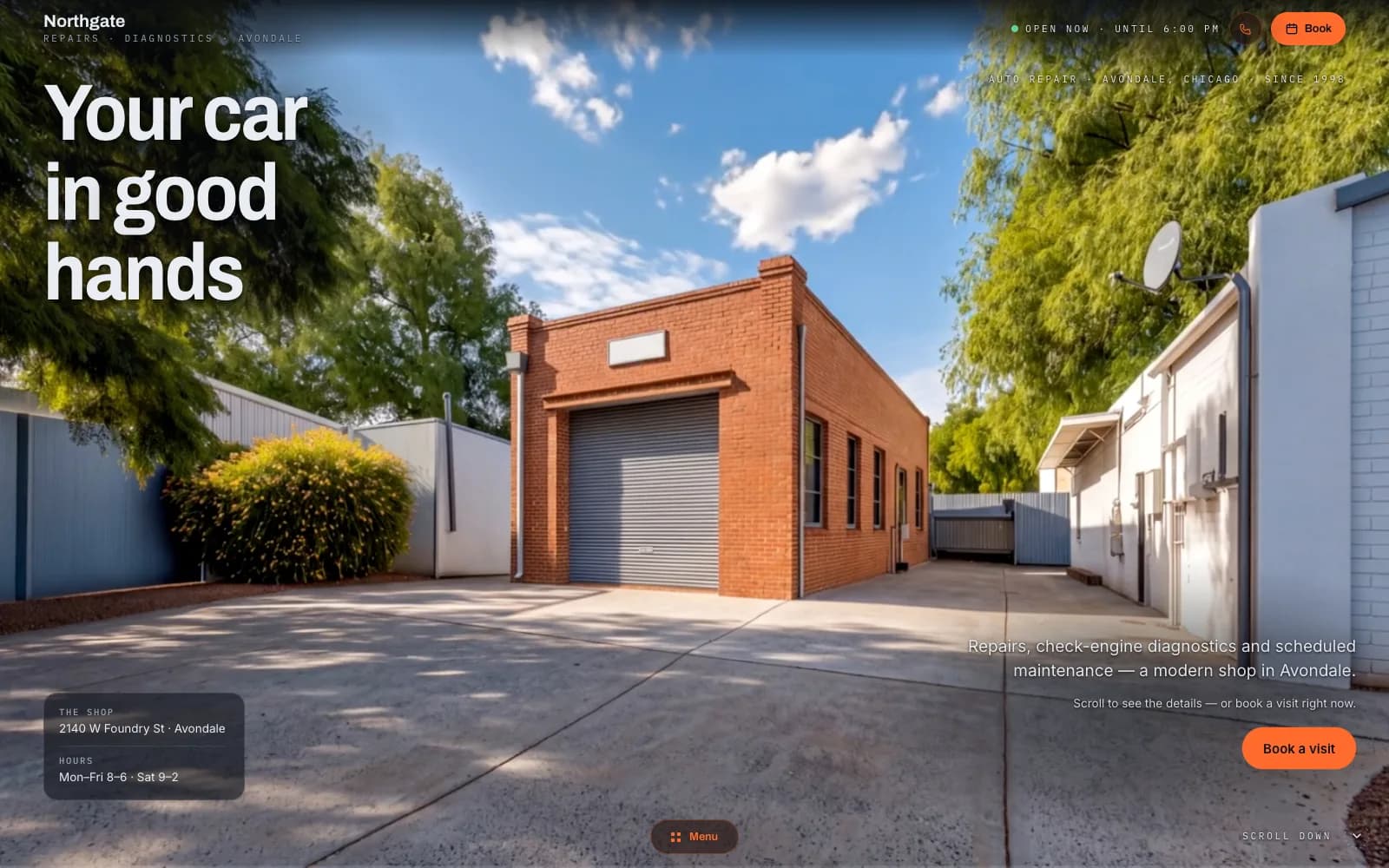
Closest demo for the structure and features: a workshop site — the tuning layout adds a model and engine lookup table, a dyno gallery and an LPG enquiry form. Your site gets its own design.
01
Model and engine lookup table
A table of the makes, models and engine codes you tune, with the stage you offer for each and a price “from”. A driver filters down to his engine in two taps, and every row can be its own indexable page, so a search for a specific engine code can land on you.
02
Dyno results gallery
Your dyno sheets, before and after, with the car and the stage in the caption. Real charts from your own rollers do more than any adjective. You send them to me from your phone the day you print them, and they're up once I've looked at them; that's part of the plan.
03
LPG installation enquiry
A form for gas: car, engine, mileage, whether it has direct injection. You reply with a system and a quote, and the customer already knows what to expect when he drives in.
04
Price list by stage
Stage 1, stage 2, DPF and EGR work, gas — each with a price “from” and one plain sentence on what is included. You edit a number in the panel and it changes everywhere.
05
WhatsApp and call bar
On the phone a sticky bar: call, WhatsApp, directions. A tuning customer sends a photo of the engine bay first and rings second; the bar makes that one tap. Every tap is counted as a lead.
06
Customer reviews from Google
Your latest reviews on the page, right next to the dyno sheets. A driver trusts a stranger's review of your remap more than your own description of it.
Most tuning sites are either a Facebook page or a template with a stock photo of a turbo. Neither answers the only question a driver has: what can you do with my engine, and what will it cost. He types his engine code into Google at night, and whichever site shows a table with his engine in it, a dyno chart from a similar car and a price “from” is the one he messages. A site that just says “professional chip tuning” and lists no engines makes him keep scrolling. That is the whole idea of the lookup table: the page speaks his language before he has to explain himself.
I do the building myself; AI puts in the hours and I make the decisions. Websites for performance shops live or die on details: engine codes spelled the way drivers search for them, the stage names you actually use, a dyno sheet that stays legible on a phone. Pages are server-rendered, so each engine row and each dyno post is indexable on its own, not hidden behind a script. One person is accountable for all of it, and that person knows the code, so a question about adding an engine or changing a price is answered by the person who will do it. I don't quote power figures on your behalf: the table shows what you tell me you achieve per model, as measured on your dyno, and nothing more.
There is no build fee and no agency retainer. You pay a monthly plan; I host the site, keep it updated and change what you ask me to change: a new engine in the table, a new dyno sheet, a seasonal LPG offer. If it stops earning its keep, you cancel; the plan runs month to month, with no annual contract to break. The dyno charts and the text are yours. The site runs on a free Givyx subdomain; if you want your own domain, you buy it in your name and I connect it for free.
first month free
- Up to 15 pages
- Everything in Starter
- Online booking
- Unlimited changes (new features quoted first)
- Advanced SEO
- Analytics dashboard
- Priority support
- 1 design refresh / year
First month free — you pay from month two, and only if you keep the site. Changes are unlimited on the Studio plan, and online booking is included. Other plans on the pricing page; no build fee on any of them.
Can the site show power gains per model?
Yes, as a column in the lookup table, and I only put in what you give me: per model, as measured on your dyno. I won't copy figures from a tuning-box catalogue or round them up to make a row look better. If you would rather not publish numbers at all, the table shows the stage and the price and the dyno gallery does the talking.
How do I word the warranty and the risks?
You tell me what you cover and what you don't, and I write it plainly on a page of its own: what a remap does to the factory warranty, what you guarantee on your own work, what happens if the car comes back. I'm not a lawyer and I won't write your terms for you; I make sure what you decided is easy to find and impossible to misread.
How long until it's live?
A few days in, there's a version to click through; it goes live when the copy, the engine table and the dyno photos have your approval, usually within two to four weeks. The table takes longest, so send me your engine list early, even as a spreadsheet.
Who adds new engines and new dyno sheets?
Either of us. A new engine row with its price you add yourself in the panel, a minute from your phone. A new dyno sheet you send me on WhatsApp, a message is enough, and it's up once I've looked at it, as part of the plan. Nothing waits for a ticket.
Can I see where the leads come from?
Every call tap, WhatsApp tap and LPG enquiry is counted, with the source (Google, a forum link, Facebook). You also see which engine pages get the most visits, which is useful when deciding what goes on the dyno next. It's all in your panel, without asking anyone for a report.
◆ let's build
Tell me which makes you tune, whether you fit LPG and whether you have your own dyno. I read every message and reply within a day.